
Observing an eclipse in 1764: what a 18th-century poster can tell us
A few hours before the Moon passes in front of the Sun on Wednesday, August 12, 2026, the French National Archives shared a poster on their social media that immediately caught my attention.
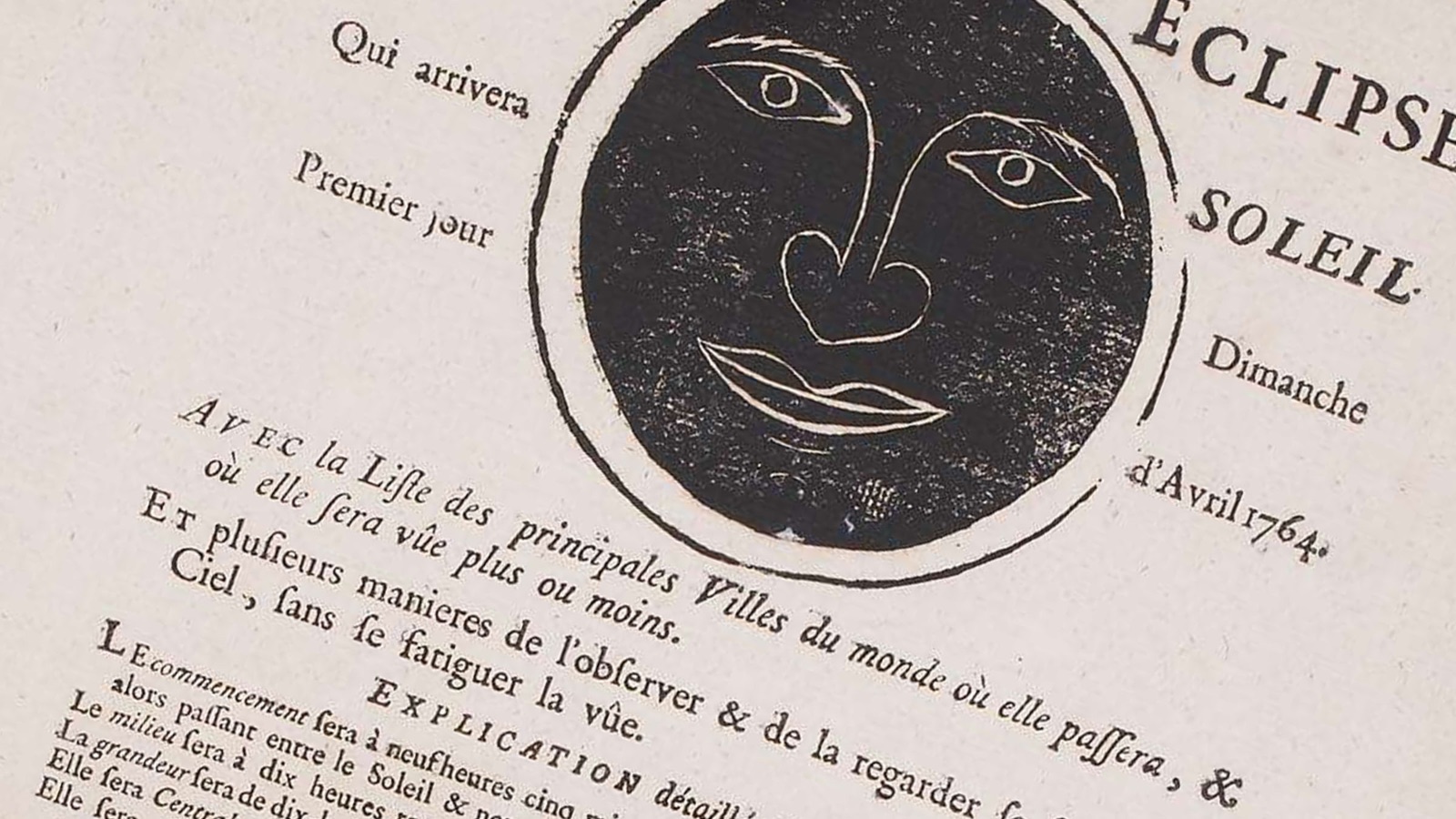
In the 18th century, just as in 2026, observing an eclipse required some preparation.
« Grande Eclipse de Soleil Qui arrivera Dimanche Premier jour d’Avril 1764. » “Great Eclipse of the Sun, which will occur on Sunday, the first day of April 1764.”
A title that certainly does not hold back. But this poster is not a scientific publication: its purpose is to inform and prepare people for an event they are about to witness themselves.
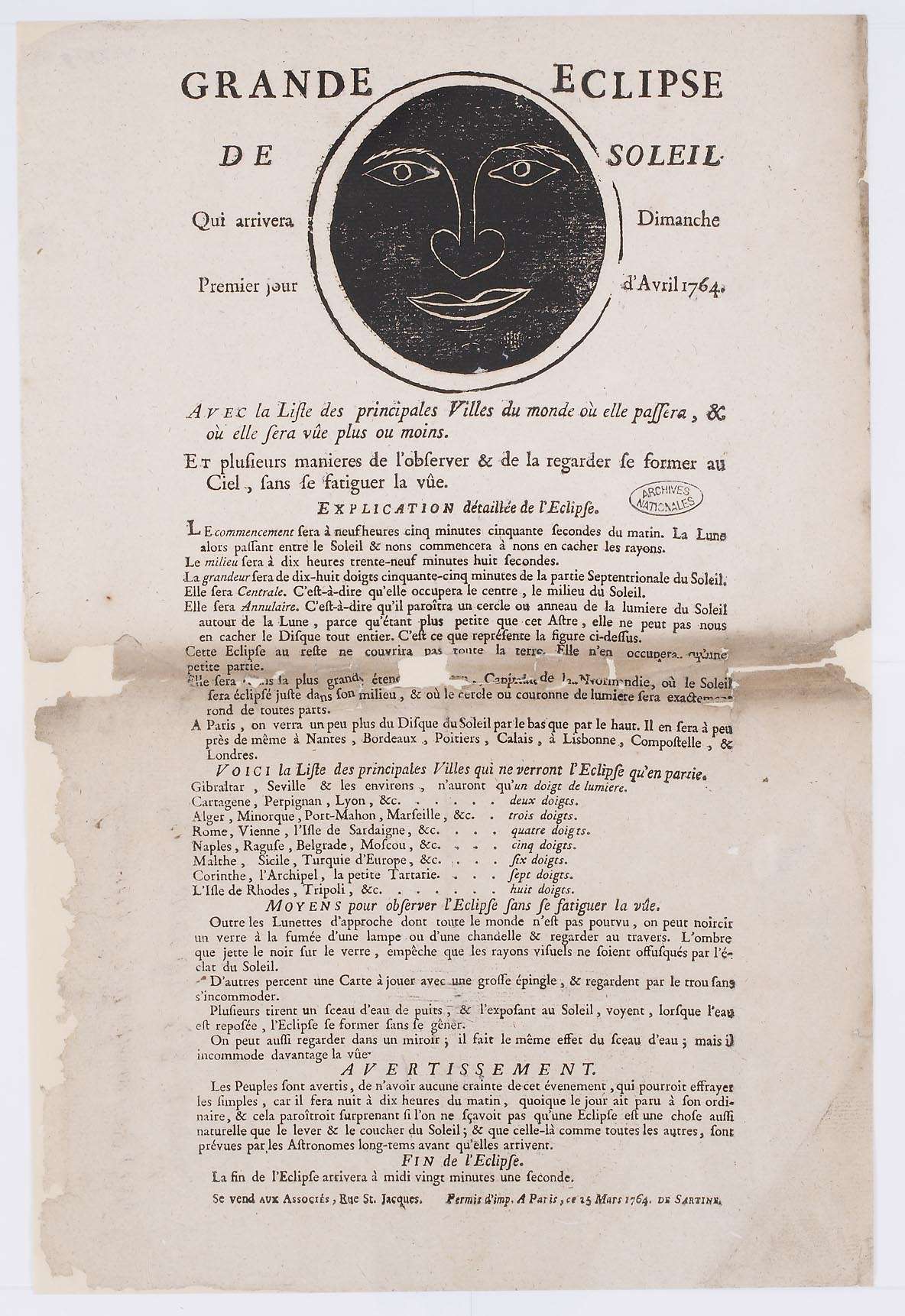
At 9:05 a.m. — and 50 seconds! — on April 1, “La Lune alors passant entre le Soleil et nous commencera à nous en cacher les rayons.”
“The Moon, passing between the Sun and us, will then begin to hide its rays from us.”
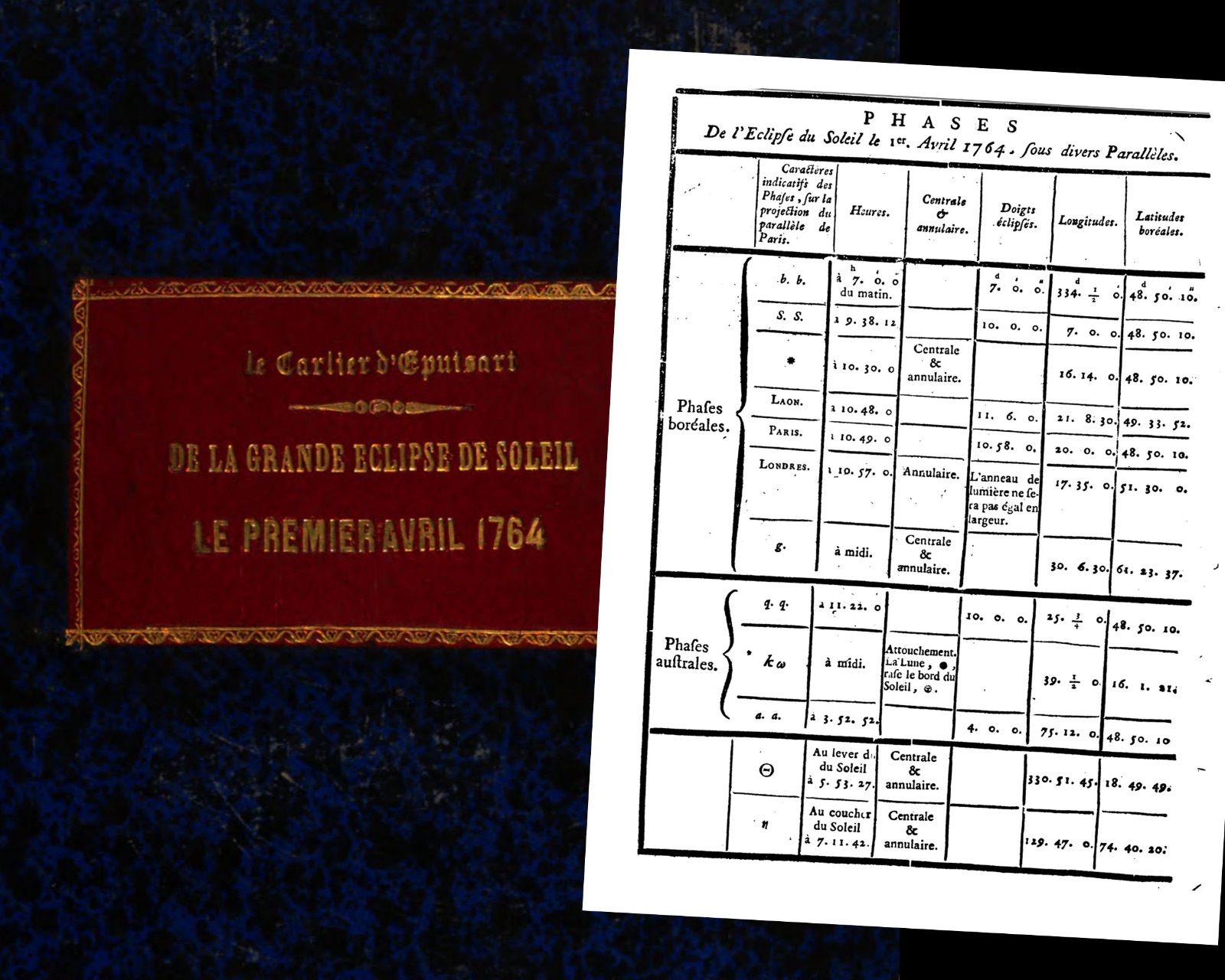
What is striking is the precision of the information. The poster gives the exact times of each stage of the eclipse, its magnitude and location, as well as how it will appear from different cities across Europe.
The calculations for the 1764 eclipse were indeed accurate enough to determine the circumstances of the eclipse from different locations.
The poster then gives instructions for making your own observation device. No special eclipse glasses available at the local pharmacy: everyone had to find an accessible way to satisfy their curiosity without frying their retinas — or, as the document puts it so elegantly, “sans se fatiguer la vue” (without straining the eyes).
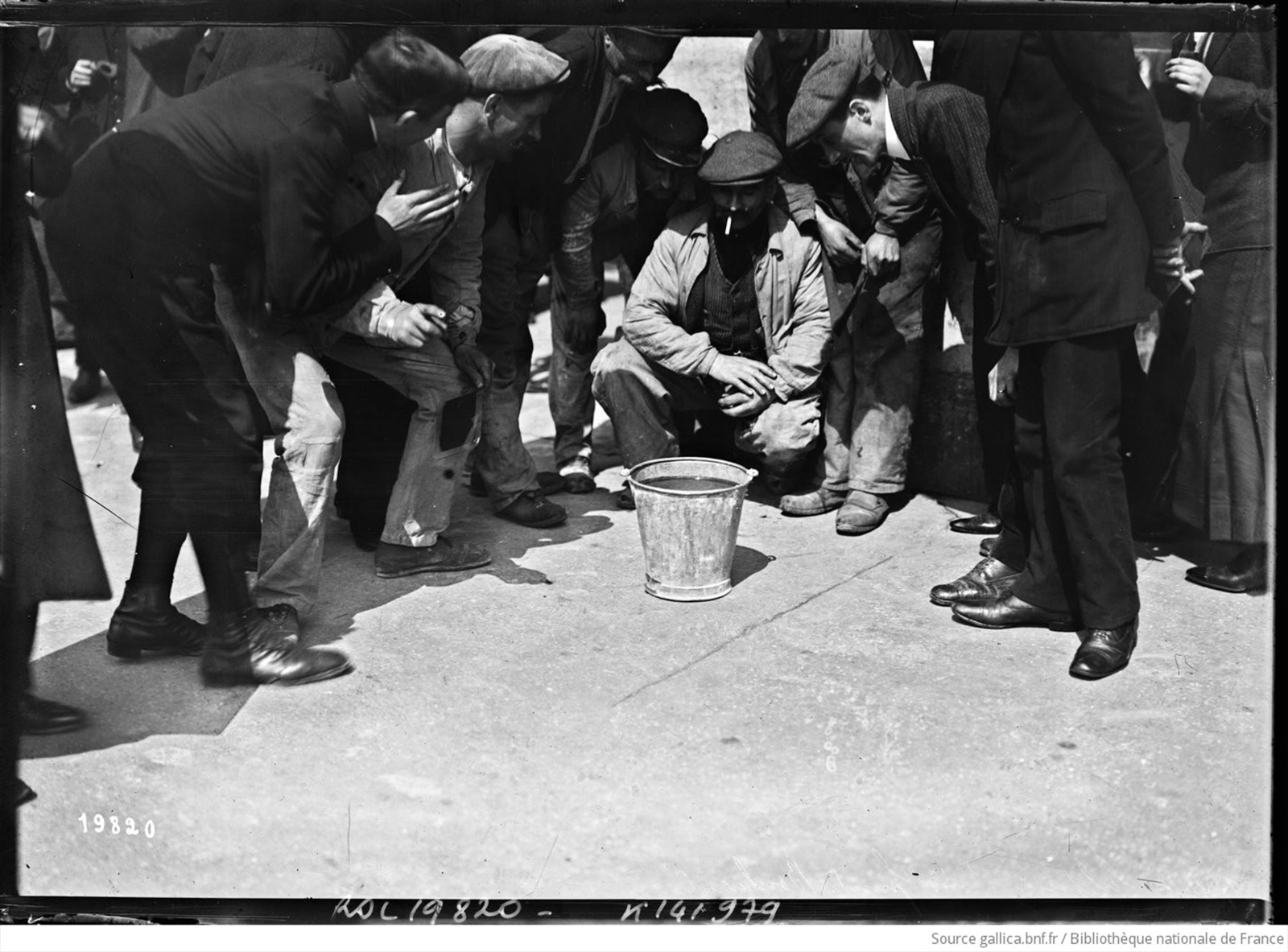
Several methods are suggested: blackening a piece of glass with lamp smoke and looking through it, piercing a playing card with a pin and looking through the hole, or even observing the eclipse in the reflection of water poured into a bucket.
This poster is full of charming visual details that firmly place it in its time.
Starting with the lovely engraving of the Moon passing in front of the Sun. And, as was often the case in older printed documents, the title ends with a full stop — something that would probably make any editor today wince!
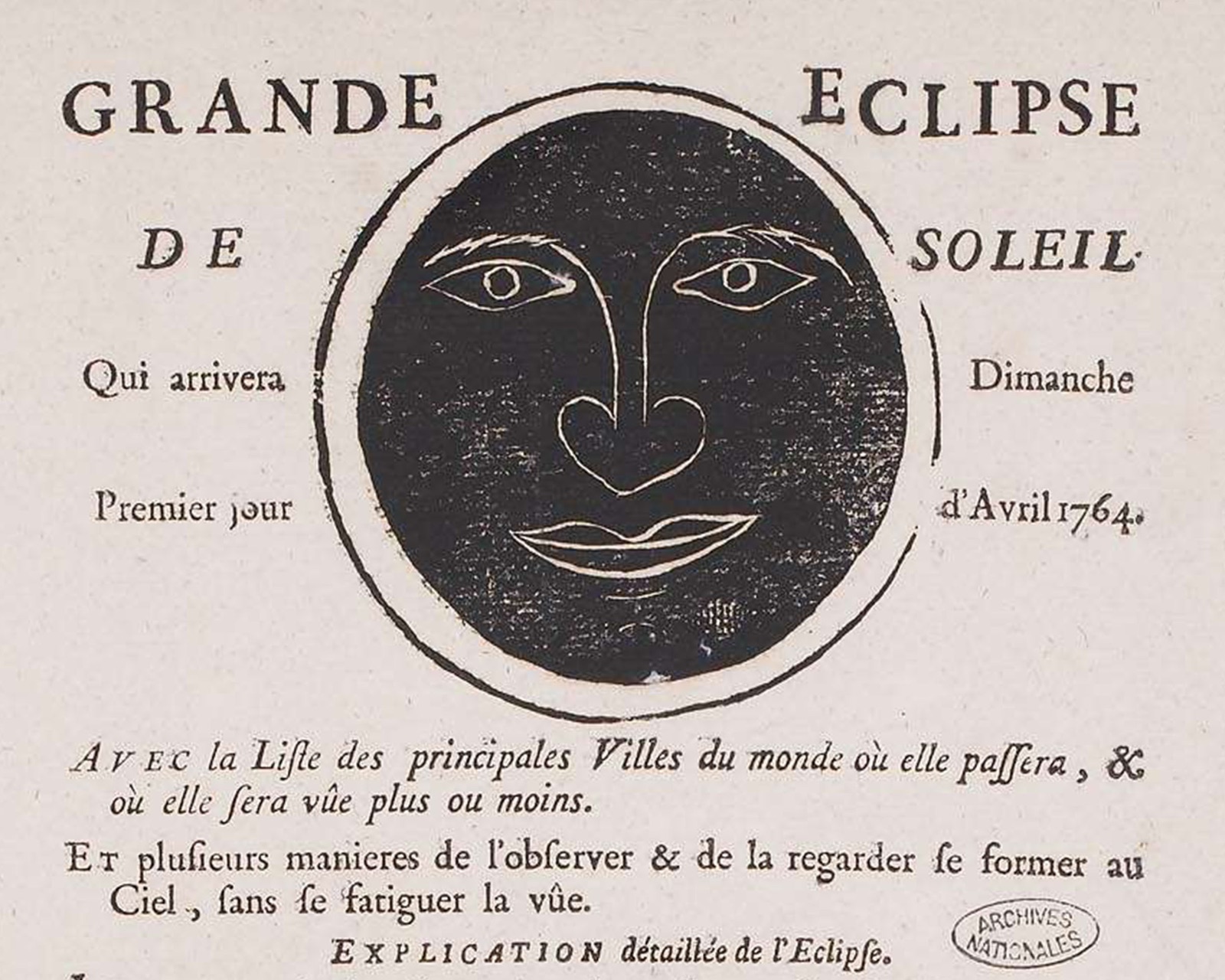
We can also spot the famous long s (ſ), which looks like an f to modern eyes. It was still commonly used in printed texts in the 18th century. The “round s” we use today was notably used at the end of words.
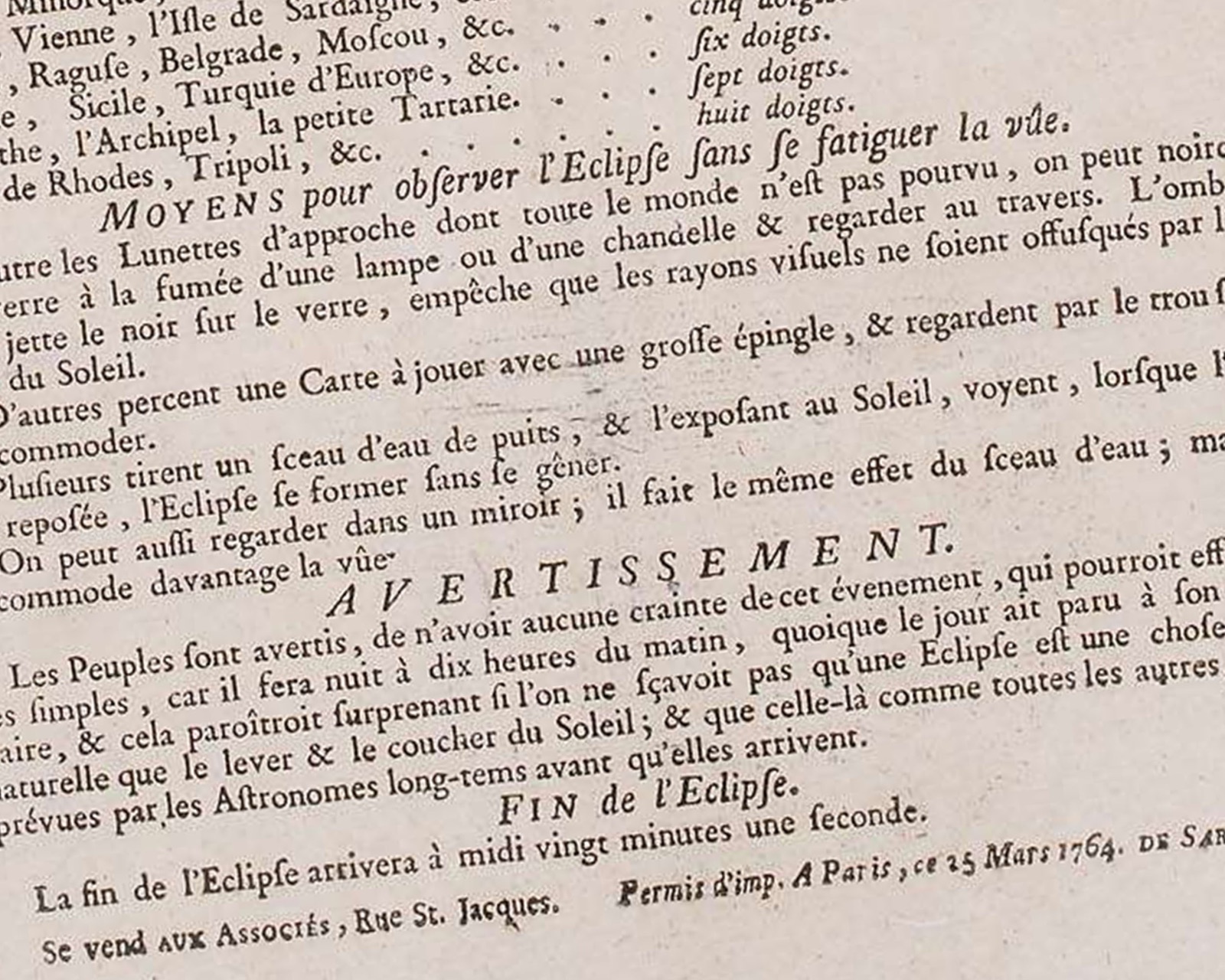
« Les Peuples sont avertis, de n’avoir aucune crainte de cet évènement, qui pourrait effrayer les simples, car il fera nuit à dix heures du matin. »
“The people are hereby warned not to fear this event, which might frighten the simple-minded, as it will become dark at ten o’clock in the morning.”
A final sentence that says quite a lot about the period, and reminds us that even such a precise document can reveal the concerns, habits and beliefs of the people it was intended for.
Reference:
Grande éclipse de soleil qui arrivera dimanche premier jour d’avril 1764, poster, 1764.
Archives nationales, K 1, no. 71.